Ecstatic dance: what it is, how it works and the rules of the circle
What ecstatic dance is, how an ecstatic dance evening unfolds, the rules of silence and consent, and how to find a serious one near you.
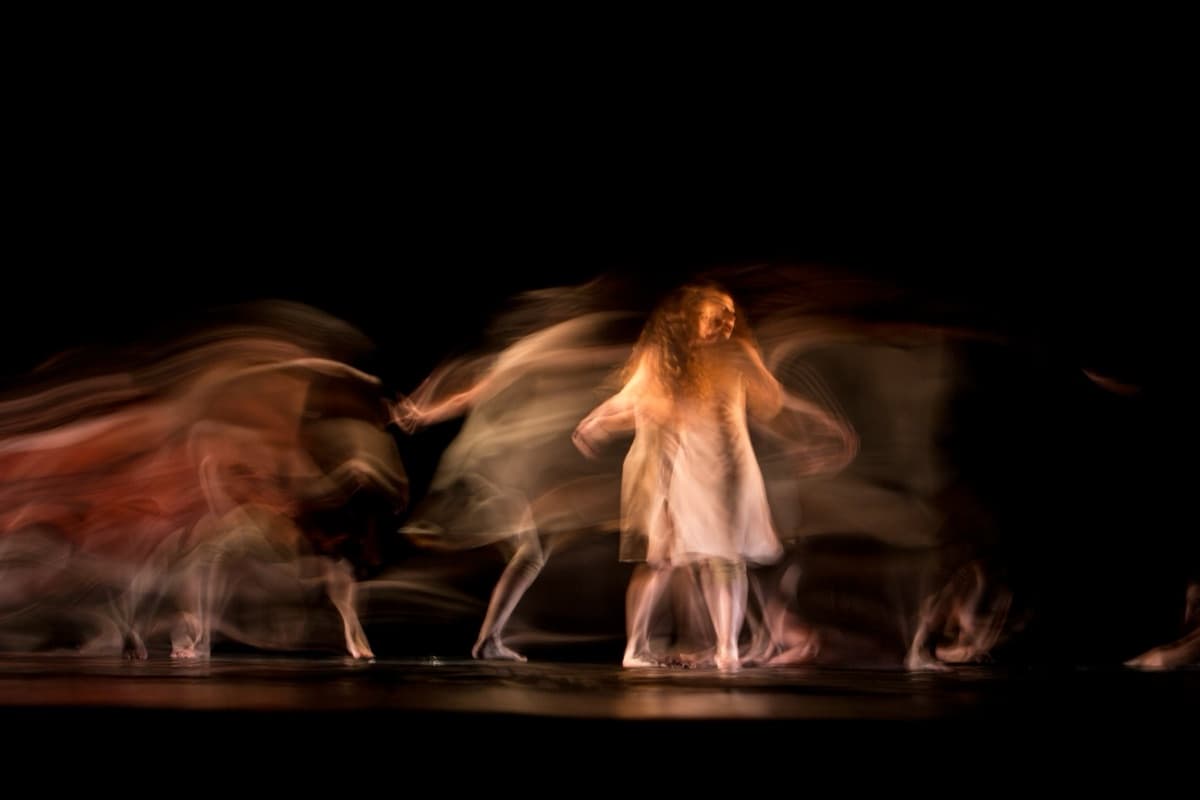
Ecstatic dance is a dance floor with no alcohol, no conversation and nobody watching you. It sounds like a contradiction, and in fact it is the holistic practice that generates the most suspicion beforehand and the most enthusiasm afterwards.
People who go almost always describe it the same way: the first half hour is awkward, then something happens.
What ecstatic dance is
Ecstatic dance is a space for free movement guided by music, with no steps to learn, no choreography, no required partners and no judgement. A DJ builds a musical journey of a couple of hours and participants move however they want.
It is not dance therapy, it is not a class, it is not a night at a club. It is a format of its own, born between the United States and Europe in recent decades and now found in many cities.
The "ecstatic" in the name does not promise ecstasy. It points to the idea of temporarily stepping out of the control of the rational mind — which sometimes happens and sometimes does not.
The rules of the circle
This is what makes ecstatic dance different from any other dance setting. The rules vary slightly from collective to collective, but the core is almost always this.
No talking
On the dance floor you stay silent. No chatting, no comments, no introductions. It is the rule that throws people most at first, and the one that makes everything else work: without words there is no social conversation to manage, so there is nobody to impress.
There is usually a separate area where anyone who wants to talk can do so.
No alcohol or substances
The evenings are sober. This is not moralism: the aim is that the altered state, if it comes, comes from movement and music.
No shoes
You dance barefoot or in socks. It helps the contact with the floor and reduces noise.
No phones, no photos
Nobody films. It is the condition that allows people to move in ways they would not allow themselves elsewhere.
Consent is explicit
You can connect and dance with others, but the invitation is offered and can be declined without explanation. The conventional gesture to decline is to bring your hands to your heart and nod: it means "thank you, no", and nothing more is needed. Nobody should insist.
If at an ecstatic dance evening someone does not accept your "no", that collective has a facilitation problem — you do not have a rigidity problem.
How an evening unfolds
Opening
Everyone sits in a circle. Whoever leads reminds everyone of the rules, offers a few minutes of centring or breathing, sometimes a brief round of intentions. It is short.
Warm-up
The music starts slow and quiet. Many stay on the floor, stretch, barely move. This is where the awkwardness concentrates, and that is normal: you are not doing anything wrong, you are just going through the uncomfortable part.
The rise
The rhythm grows. The floor fills up, the energy rises, and at some point you notice you have stopped wondering how you look. This is the central part, usually the longest.
The peak
The most intense and fastest moment. Some dance full on, others stop at the edges. Both are legitimate.
The descent
The music gradually slows down to silence. Many end up lying on the floor.
Closing
There is often a final circle, sometimes with optional sharing. After that you can talk.
An evening usually lasts two to three hours. The contribution requested is usually comparable to entry to an evening cultural event, with variations between cities and collectives.
What to really expect
That the start is awkward. Practically everyone says so. It is not a sign that the place is not for you.
That nobody is watching you. This is the most common observation from people who come back: the feeling of being watched fades when you realise everyone else is absorbed in themselves.
That emotions may surface. Crying, anger, sudden euphoria, melancholy. Prolonged movement without mental control brings up unexpected material. It is common and not a problem.
That you may also feel nothing special. It happens. Not every evening is a transformative experience, and that is perfectly fine.
That you are free to stop. Sitting at the edges for twenty minutes is a legitimate choice, not giving up.
Who should be careful
It is a low-risk practice, but a few precautions help:
- Joint or cardiovascular problems: it is two or three hours of physical activity, at times intense. Pace yourself and stop when needed.
- Hypersensitivity to loud sounds: the volume during the peak is high. Ask in advance or bring earplugs.
- Acute emotional fragility: if you are going through a very hard time, consider going with someone or choosing a smaller evening.
- Hydration: you sweat far more than you expect. Bring water.
There are no absolute contraindications for most people, but as with any intense practice the general principle applies that you will find in the guide on spiritual ceremonies and safety.
How to find a serious evening
The most reliable signal is how the rules are treated. A serious collective states them at the start, every time, even if only regulars are present. If the rules are taken for granted or presented as a formality, the quality of the space suffers.
Other things to look at:
- Size. Very crowded evenings lose the intimate quality of the format.
- The presence of reference people looking after the space, not just the DJ.
- Sobriety actually applied, not just written in the description.
- Regularity. A collective that meets every week or every month has built an internal culture; a one-off evening often has not.
To find out what exists in your area, the guide to holistic events near you explains how to search locally.
Frequently asked questions
Do I need to know how to dance?
No, and that is literally the point. There are no steps, no technique, no right or wrong. Walking slowly for two hours is a valid way of taking part.
Can I go on my own?
Yes, and most people do. The silence rule removes the hardest part of going to an event alone: you do not have to talk to anyone.
What music is played?
Very varied: electronic, world music, tribal rhythms, acoustic pieces, often without lyrics in languages participants understand, precisely so as not to activate the verbal mind.
What should I wear?
Something comfortable, in layers, that lets you move freely. You will sweat: bring a spare T-shirt.
Is it a religious or spiritual practice?
It is not tied to any religion. Some collectives give it an explicit spiritual frame, others present it as a pure movement practice. Check the description of the evening.
What if I want to leave halfway?
You can do so at any moment, without explanation. Nobody will stop you.
Is there touching?
Only if both people want it, and always in a non-sexual way. Contact is an option, never an expectation.
Conclusion
Ecstatic dance asks for very little — no experience, no equipment, nothing to say — and gives back something hard to find elsewhere: two hours in which the body decides and the head stays quiet.
The only useful advice is to give the awkward first half hour a chance, because it is the toll you pay. Find an ecstatic dance evening among the events on Wanderer, or, if there is none in your area, organise one yourself.
